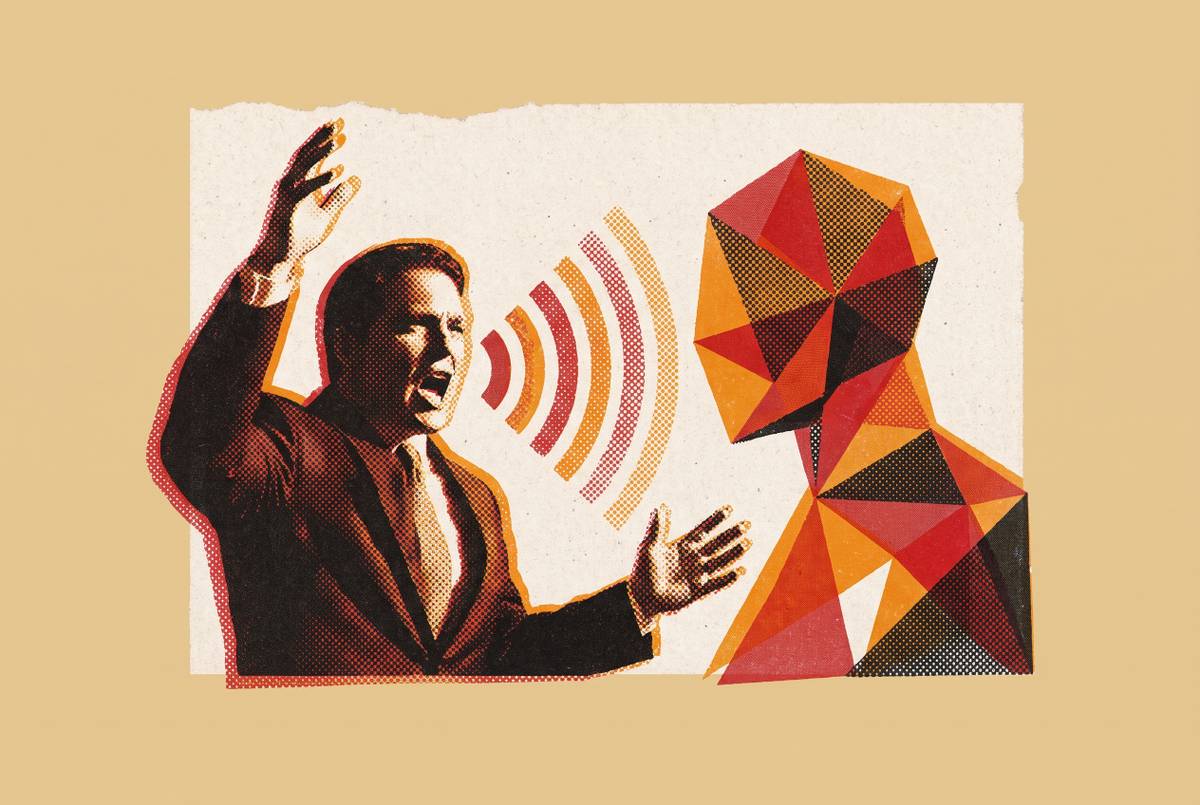
Voice Debate vs Text Debate for Skill Building
October 10, 202611 min read2,554 words
Text: Outloud Debate Editors
Voice debate builds real-time pressure skills that text debate structurally cannot replicate.
Voice debate and text debate are not two versions of the same exercise. They build overlapping but distinct skill sets, and the distinction between them is mechanical.
What voice and text debate each actually train
Text debate and voice debate share a foundation. Both demand research, a clear line of reasoning, and the ability to weigh evidence against a counterargument. Where they diverge is in what each format asks of the body and the clock. Voice debate requires a person to manage time pressure, vocal delivery, posture and gesture, and an opponent's live response, all at once, in front of someone who is scoring the result. None of that cluster exists in a text exchange, where the clock is not running and a response can be drafted, reread, and revised before it is sent. Text debate, in turn, produces something voice debate structurally cannot: a case that has been iterated on, evidence that has been sourced with care, and rebuttal reasoning that was built without anyone waiting on the other end. The skills that come out of spoken rounds, taking charge of a room, controlling a voice under stress, reading an audience, saying something complete inside a hard time limit, carry directly into presentations, job interviews, and meetings where someone has to make a case out loud. Text debate does not install those in the same way, and it was never designed to.
Why real-time pressure separates the two modalities
The real line between these two formats is whether a clock is running, whether an opponent answers immediately, and whether someone is watching and judging delivery as it happens. Competitive debate rounds are built around timed constructive speeches and timed rebuttals, and the pacing judgment that comes from working inside that structure does not transfer in from untimed written exchange. A person can write a flawless rebuttal over the course of an evening. Producing the same quality of rebuttal in ninety seconds, out loud, while someone across the room is about to respond, is a different skill, built only by doing it repeatedly under those conditions. Spoken rounds also demand a kind of emotional regulation that text removes by design: being watched, timed, and evaluated at the same moment is a physiological load as much as a cognitive one, and there is no equivalent experience available on a page. The ability to think on one's feet and get a clear idea out before the clock runs is its own trainable skill, separate from the ability to construct a sound argument given unlimited time. Cross-examination makes this sharpest. Holding composure while someone questions a position in real time, live, with no pause button, is a skill that belongs to the spoken format alone and has no async equivalent. Arguments that matter outside a debate round, in a negotiation, in front of a hiring panel, in a public meeting, happen under exactly this kind of pressure. Training without it leaves a real gap in preparation.
Platforms built around live, timed exchange exist specifically to put a person inside that pressure. On Debatable, for example, a user is matched with a live opponent and argues inside a timed round where the clock and an immediate response from the other side force the same split-second decisions and the same need for composure that separate voice debate from writing back and forth. For someone starting out with no team, no coach, and no prepared brief, that structure is one of the more direct ways to put the pressure variable into practice.
How vocal delivery functions as a separate argumentation layer
Delivery is not decoration layered on top of an argument. It functions as a second channel of argumentation, one that shapes whether a warrant lands and how credible a speaker sounds, independent of whether the underlying logic is sound. Pitch, volume, pacing, articulation, and the strategic use of a pause are each trainable, and each changes how an audience or a judge receives a claim before they've even finished evaluating its content. Gesture, eye contact, movement, and facial expression compound the effect: all of them carry evaluative weight in a live round, and none of them exist at all in a text exchange, where an argument arrives stripped down to words on a screen. Voice quality, articulation, pronunciation, eye contact, and gesture are not vague qualities some speakers happen to have. They are specific, learnable skills that structured spoken practice installs the same way practice installs any other skill.
It's tempting to treat this as superficial, to assume that in a serious argument, content should be what decides the outcome. That is not how arguments function outside a debate room. In interviews, negotiations, courtrooms, and leadership settings, delivery is evaluated alongside content and frequently decides the outcome on its own. A debater who has never trained delivery under live pressure carries a blind spot into every one of those situations, no matter how sound the underlying case is. In a live voice round, every part of delivery, pitch, pacing, articulation, is part of the round itself and gets evaluated as such. Platforms that score spoken rounds on clarity alongside logic, the way Debatable's AI judge panel does, treat delivery as a measurable, trainable variable, which makes the gap visible to a debater.
What text debate genuinely does better, and for whom
None of this makes text debate a lesser format. It trains a different part of the same skill set, and for some people it is the right place to begin. Removing the clock is a feature, not a shortcoming, when the goal is building longer case construction, sourcing evidence carefully, and reworking rebuttal logic across several drafts. A student who experiences real anxiety at the thought of speaking in front of others can use text as a lower-stakes entry point that still builds argument organization, evidence evaluation, and logical sequencing, skills that carry over once spoken practice starts. Written argument also matters on its own terms outside of any debate context: legal briefs, policy memos, and academic papers all reward exactly the precision that text debate trains, and that value doesn't depend on whether the writer ever steps into a live round.
The two modalities also reinforce each other more than a strict either/or framing suggests. A study out of Utrecht University found that a debate intervention built a close connection between arguments made in writing and arguments made aloud, and that this connection made it easier for gains in one modality to transfer to the other. Spoken practice may act as an upstream catalyst that lifts written argumentation along with it, rather than the two skills developing on separate, unconnected tracks.
The more complete training ground for arguments that matter in real life
Given that transfer runs in both directions, the practical question is which modality to prioritize when time is limited, and the answer depends on what the arguments in question actually look like outside of practice. Real arguments mostly happen out loud, in real time, under some degree of social pressure, whether that's a performance review, a sales call, or a disagreement at a town hall meeting. Voice debate trains the full stack that those situations demand, research, structure, evidence evaluation, plus the delivery and real-time rebuttal that text cannot replicate, while text debate trains a meaningful subset of that same stack. The foundation is shared and gains do move between the two, but only one of them puts a person through the complete rehearsal.
There's a case to be made that this matters more, not less, as AI tools make written output easier to produce. When anyone can generate a polished paragraph in seconds, the argument that still requires a human in the room, delivered live, under a clock, in response to a question nobody wrote in advance, becomes the differentiating skill. Debate asks for research, writing, speaking, listening, and teamwork at the same time, and the spoken round is where all of those demands run simultaneously rather than in sequence, which is part of the reasoning behind proposals for mandatory oral debate in schools. None of this is to say that strong competitive text debaters fail to become capable arguers in person. Most of the people who reason well out loud in high-stakes settings also logged significant time in live rounds at some point. Text alone is rarely the entire training regimen behind someone who argues well under real pressure.
Making Spoken, Judged Practice Accessible at Scale
The reason text-based practice has historically dominated outside well-funded debate programs has little to do with preference and everything to do with access. Finding a live opponent, reserving a room, and getting a qualified human judge in the chair at the same time is logistically hard, and that difficulty has pushed a lot of practice onto the page by default. AI judging removes much of that bottleneck. A completed voice round can now produce a scored, written decision automatically, one that shows which warrants actually landed, which arguments went unanswered, and where a rebuttal attacked a conclusion instead of the reasoning underneath it, which is the kind of specific feedback that actually builds skill over time.
Language model judges are known to carry positional bias and a tendency toward self-preference, favoring arguments or phrasing that resemble their own outputs. The structural safeguards matter more than the AI itself. Scoring rules published before a round starts, rather than explained away afterward, and a working path to appeal a decision to a human reviewer, are not optional extras. They are what makes an AI-judged system trustworthy enough to rely on. The right design principle is for AI to handle the mechanical layer, scoring, flagging dropped arguments, catching contradictions between a speaker's own speeches, while the debater keeps full control over the strategic layer: which arguments to run, how to build a case, how to deliver it. AI judging, built this way, is what makes spoken, judged practice available to someone with no team and no coach, not a replacement for a debater's own judgment about strategy.
A comparison of platforms for live spoken debate practice
A platform worth using for voice debate practice runs real timed rounds, pairs a debater with a real or an AI opponent, delivers feedback tied to specific arguments, and publishes its scoring criteria before a round begins.
Debatable is built around that structure directly. A user finds a live opponent and argues a chosen topic out loud in a timed round, or skips the wait entirely and debates an AI opponent in a voice round that starts immediately. Every round is scored by a panel of three AI judges, each built by a different company, and the panel returns a verdict and a written explanation within seconds of the final speech. Scoring runs out of 100 per side, split into the argument itself (worth 50 points), responses to the other side's case (worth 35), and structure and clarity (worth 15). The scoring criteria are published before any round starts, a result can be appealed to a human reviewer, and the platform has no financial stake in who wins a given round, which is the structural transparency that directly answers the bias concern around AI judging. A public leaderboard ranks users by their best score, with live rounds and AI rounds marked separately so the record stays legible rather than blurring two different kinds of practice together. Climbing that leaderboard carries a real stake beyond the score itself: top-ranked users can be selected to debate creators and streamers live, which gives practice rounds a reason to matter beyond self-improvement.
Other platforms take narrower or differently-focused approaches. PracticeDebate.ai is built for solo AI voice rounds specifically, with live voice interaction that includes cross-examination and scoring across six categories, including direct feedback on delivery such as pacing and filler words. It's trained on NSDA standards, which makes it a natural fit for competitive students who want to drill alone against an AI opponent without needing to coordinate a live match. Debater takes a different approach to evaluation entirely: real people join voice debate rooms, get assigned a side, and the audience decides the outcome by vote, which makes crowd consensus rather than AI scoring the platform's core legitimating mechanism. DebateRanker runs a global leaderboard built from those kinds of audience votes across a platform, computing rank as a weighted mix of average debate score and win rate, with an adjustment built in for users with low debate volume. It functions more as a community ranking system than a structured trainer offering argument-by-argument feedback. VersyTalks leans on repetition over theory as its core teaching method, connecting students with debaters from other schools who argue differently, which makes it useful for building out written case material and exposure to different argument styles, even though it isn't built around live spoken rounds.
Building a practice habit that uses both modalities effectively
A sound practice habit uses both modalities on purpose: text for building out case depth and argument construction, voice for the real-time pressure and delivery training that no amount of writing practice can substitute for. Given that voice debate is the harder format to access and the more complete training ground, most of a practice routine should bias toward it once the basics of structure are in place.
One solid solo method needs nothing but a topic and a timer: argue the supporting side out loud for three minutes, then switch sides and argue the opposing case for another three. This builds fluency on both sides of an issue. A debater who has never built the other side's case out loud is guessing at its weak points rather than knowing them, and that fluency is the actual foundation of a strong rebuttal. Steel-manning complements this well: take a position genuinely disagreed with and build the strongest possible version of it, the version a skilled advocate on that side would actually present, not a weakened version that's easy to knock down. That exercise is what trains the rebuttal instinct that makes live rounds sharper. Topic selection matters for this to work. Before committing to a practice topic, check whether a real argument can be named on both sides without much effort. If one side is obviously wrong on its face, the topic is too lopsided to teach anything. It also helps to check whether the disagreement is substantive, resting on values, evidence, or genuine trade-offs, or merely a disagreement over definitions. Choosing the side a debater personally disagrees with for solo practice is where most of the actual growth happens, since comfort and skill are not the same thing, and the discomfort of arguing an unfamiliar position is precisely what moves a person's ability forward.
AI feedback fits into this habit as a tool for spotting patterns, not for making decisions. Use it to catch dropped arguments and to track scoring trends across sessions, while keeping the actual strategic calls, which arguments to run, how to weigh competing impacts, how to read a judge or an opponent mid-round, under human judgment. A single round tells a debater very little on its own; the signal appears across many rounds, once scores across sessions reveal which argument types keep underperforming and where progress has flattened out. Tracked that way, many small rounds add up into something closer to ongoing coaching.