Scheduling-Free Debate Practice for Busy Adults
October 12, 20269 min read2,030 words
Text: Outloud Debate Editors
An always-available AI opponent removes debate's biggest barrier.
Busy adults who want to practice debate run into one obstacle before any other: finding a second person who is free at the same moment they are. Coordination is the problem, and coordination problems compound, so they quietly kill a habit before it starts.
Most skills that adults try to rebuild in their spare time, writing, coding, even public speaking rehearsed into a mirror, can be practiced alone. Debate cannot. Its central skill is rebuttal delivered under time pressure, and that only exists if another person is making an argument you did not script. A school debate club solves this by default: a coach fills the opponent role, teammates are in the room, meetings sit on a fixed calendar that everyone has already agreed to. A working adult has none of that infrastructure. Finding one willing partner is the easy part. That partner then has to be free at the same hour, willing to argue the same format, prepared to take the same topic, and available alongside someone to judge or score the round. Each added requirement narrows the window when practice can happen, and the window ends up closed more often than it is open. Adults who stop practicing debate rarely do so because they stopped caring about it. They stop because a single session got too costly to set up, week after week.
What debate practice requires beyond other argument practice
Arguing with a friend over dinner or posting a hot take in a comment section exercises a different muscle than debate does. Spoken, timed, judged debate against a resisting opponent develops skills that reading, writing, or casual disagreement simply do not touch.
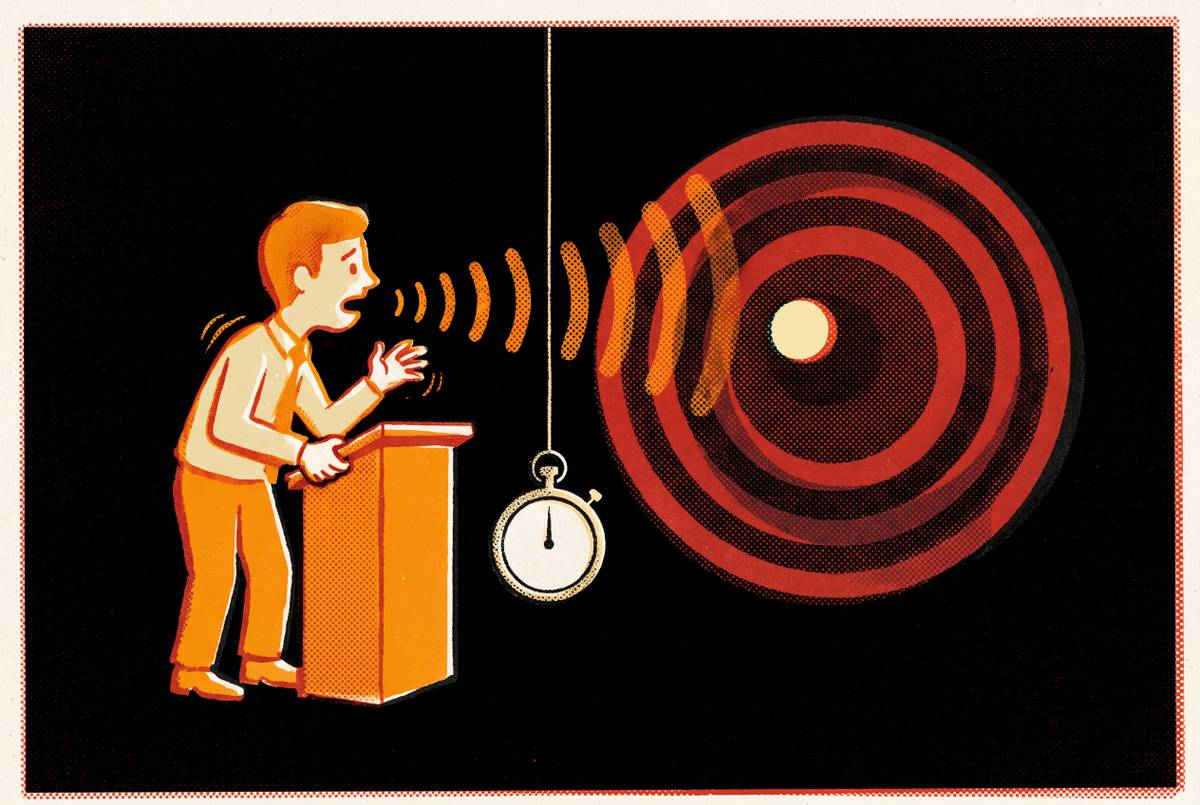
The central one is rebuttal under pressure: hearing a claim you did not anticipate, breaking down its structure in real time, and producing a spoken counter-argument before the clock expires. No amount of drafting and revising replicates that, because the entire difficulty lives in the compression of time. A closely related skill, flowing, the discipline of listening to record and understand an opponent's case rather than just waiting for a turn to speak, only develops when there is an actual opponent generating arguments that were not pre-planned. Delivery habits, like signposting a structure out loud, holding a deliberate pause, cutting filler words, also demand real-time production pressure; they cannot be edited into existence after the fact the way a written paragraph can.
Solo drills still have a place. Timed argument drills, refutation mirror exercises, and structured outlining build real components of the skill, and a debater who never does this kind of solo work is skipping useful repetition. But solo drills cannot simulate resistance, and resistance is the entire point of a round. Debate practice resembles chess training more than it resembles a classroom discussion: it requires a real opponent and a score attached to the outcome. Without both, the exercise is rehearsal, not practice. Live debate against a resisting opponent produces the irreducible skill of rebuttal under time pressure, the core live skill that no amount of reading or casual discussion can replicate, and platforms like Debatable deliver that real-opponent experience in voice-first rounds, so the format functions as practice.
How an always-on AI opponent removes the scheduling wall
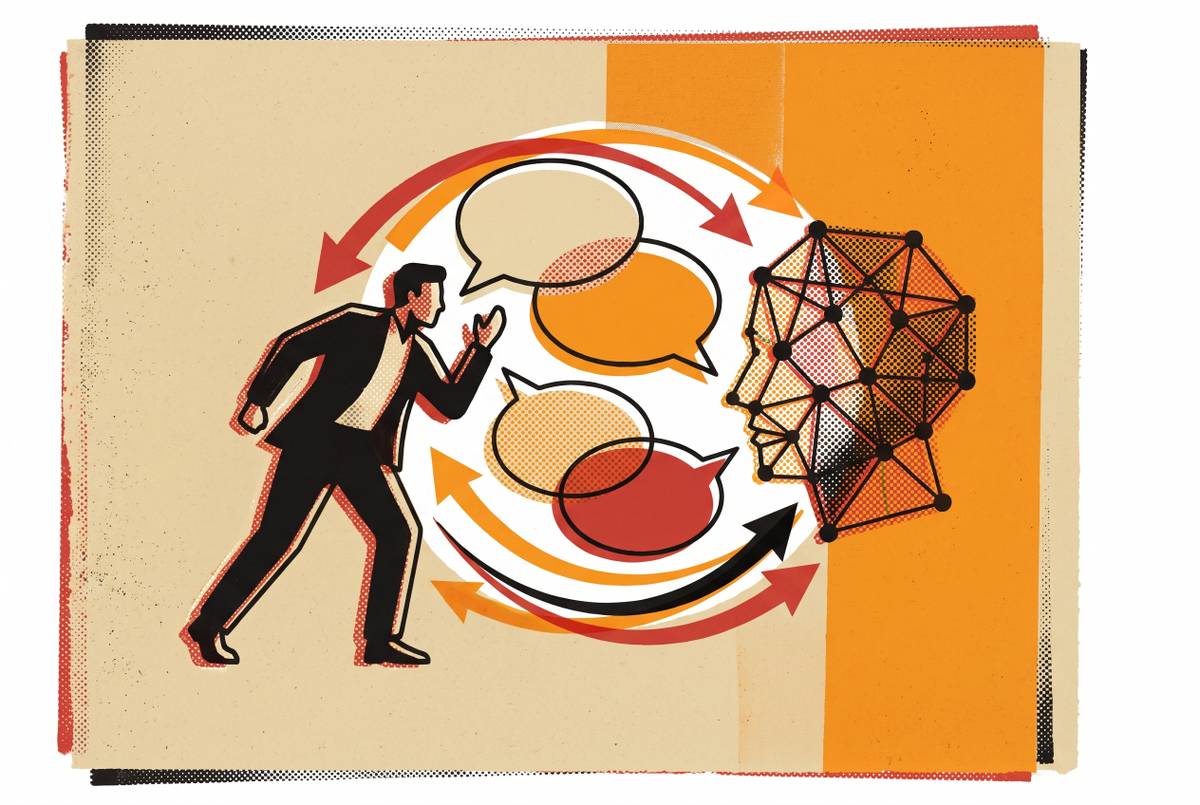
An opponent available at any hour, in any format, with no scheduling required, removes the second calendar from the equation and eliminates the structural barrier identified above.
Once an opponent is always available, the decision to practice becomes unilateral. A busy adult can open a round at 11pm on a Tuesday without finding a willing partner, proposing a topic, agreeing on a format, or arranging someone to judge. Debatable matches users against an AI opponent in voice rounds that start immediately, with no opponent queue and no calendar coordination required, so a person with twenty minutes free between a late meeting and bedtime can practice debate at 11pm on a Tuesday without any of the setup steps that used to make the session impossible to arrange.
The practical consequence is that practice stops needing a dedicated, negotiated block of time. It can be slotted into whatever gap already exists in a day, a lunch break, a commute, a few minutes before sleep, because the opponent does not need advance notice. This is the specific condition under which a genuine habit becomes possible. When setup cost drops to zero, frequency is determined by the user's own availability rather than by the intersection of two different people's calendars, which is the actual mathematical reason synchronized practice fails so often for adults with full schedules. The removal of the scheduling wall does not make an AI opponent identical to a human one in every respect, a distinction the next section takes up directly, but it solves the specific problem that keeps most adults from practicing.
How AI judging works
Access alone does not make a practice session useful. Feedback is what makes repetition developmental rather than just repetitive, and an AI judge that scores a round on defined dimensions and explains its reasoning turns each session into a feedback loop.
Scoring typically runs across several dimensions: clarity, checking for jargon, run-on sentences, and ambiguous phrasing; relevance, whether an argument actually addresses the topic or the opponent's last point, with off-topic content penalized; evidence, whether claims are backed by facts, examples, or logical reasoning; and persuasiveness, how effectively an argument counters the opposing position. The weighting is not static across a round. The algorithm used by Argue AI gives clarity and relevance more weight early in a round, then shifts weight toward persuasiveness in the final round, and this mirrors how a human judge's attention moves through a debate's arc, from understanding what is being argued to assessing who won the exchange.
Scoring is only half the value. The Coach breakdown available on ArguFight goes past the number, identifies what worked, names the specific fallacy or gap to address, and suggests a stronger move for the next round, so each session ends with a concrete directive. Debatable's AI judge panel delivers a scored verdict and written explanation within seconds, citing what was actually said in the round, giving someone with limited time actionable feedback instantly. Patterns across the verdicts become visible after ten to fifteen judged rounds. A weakness that keeps appearing, needing more evidence comparison, for instance, signals a systematic gap in technique rather than a single bad round, and a systematic gap is something a debater can actually train against.
Where AI judging falls short of a human tournament judge
AI judges carry known biases, and understanding them is what allows a debater to use AI-judged practice correctly.
Research on AI debate dynamics has found that sequential debate introduces a significant bias favoring the second debater, a structural artifact of how AI judges process turn order. That research did not include human judges in its design, so it offers no direct comparison of whether human adjudicators share the same bias at the same magnitude. The same body of research found something more counterintuitive: AI models argue more persuasively when defending positions aligned with their own prior beliefs, and arguments that go against an AI's prior beliefs are sometimes rated as higher quality in pairwise comparison even while scoring lower on persuasiveness. An AI judge's assessment of argument quality and its assessment of persuasiveness can point in different directions on the same round.
None of this makes AI judging worthless as a practice tool. It makes clear what AI judging is and is not. It works as a consistent, tireless, immediately available baseline rather than a perfect replica of a human panel, and its real value sits in how often and how specifically it gives feedback, not in exact calibration to tournament judging norms. The practical approach is to use AI-judged rounds to build argument structure, rebuttal instinct, and clarity habits, and to periodically seek human feedback, from a club, a coach, or a streamer matchup, to calibrate for the human-specific preferences an AI judge cannot fully capture, like tone and delivery style. Debatable addresses single-judge bias structurally by drawing verdicts from three independent AI models rather than one, and by making results appealable to a human reviewer, safeguards that reduce how much any single model's idiosyncrasies can skew a given round's outcome.
Building a practice habit around AI rounds, a realistic weekly structure
A sustainable practice habit for a busy adult puts AI rounds at the center of the week and fills the space around them with short, targeted solo work.
The underlying principle is that improvement tracks targeted practice on named weaknesses, not sheer repetition. A debater who completes thirty judged rounds and reviews the ballot after each one, then drills the specific weakness it names, improves more than a debater who completes a hundred rounds and never looks at the feedback. If you don't have much free time, a realistic weekly rhythm might run three sessions. One AI opponent round mid-week serves as the anchor, and it gives you a fresh ballot worth reviewing closely. One short solo drill session, a two-minute argument drill or a refutation mirror exercise, targets the specific weakness that ballot named. One live 1v1 round on a weekend, when a longer block of time is actually available, tests whether the improvement holds up under opposition that is less predictable than an AI opponent's patterns. The AI rounds warm up your reflexes during the week, and the human round on the weekend checks whether those reflexes survive contact with someone who does not argue the way a model does.
Tracking ballots matters as much as the rounds themselves. A simple log, noting the round, the result, the main feedback point, and the skill area it touched, makes a systematic weakness visible once enough rounds have accumulated. Without that log, each session feels like an isolated event, and the habit drifts with no direction. Side selection deserves the same intentionality: time spent preparing the side of a topic that feels harder produces more growth than repeating the side that already feels comfortable, so both sides of any given topic are worth practicing. Debatable's progression path, solo AI rounds and live 1v1 human opponents running in parallel with separate leaderboard tracking, and the possibility of a creator matchup for top performers, maps onto this exact structure: AI rounds build the baseline, human rounds stress-test it, and the leaderboard gives the whole habit an external reason to continue.
The practice-to-live-opponent progression on a platform like Debatable
AI practice delivers its full value when it operates as the entry stage of a longer progression toward live human competition, not as a permanent replacement for it.
Debatable is structured around that progression directly. A user begins with AI opponent voice rounds, moves into live 1v1 matches against other people as their ranking climbs, and the highest-ranked performers become candidates for live creator matchups, debates that air to a streaming audience, with the leaderboard tracking the journey from first round to that point. The leaderboard ranks players by their best score, so the practice habit gets a visible, external reference point beyond a debater's own sense of whether they are improving, measured against other people who went through the identical judging process. Creator matchups add a third competitive tier on top of that: a high leaderboard rank puts a user in consideration for a live debate with a creator or streamer, contingent on topic fit and both parties' availability. The path from an AI warm-up round to a broadcast-level debate runs through a single platform rather than through separate, disconnected opportunities.
None of this depends on institutional backing. You need no affiliation with a school or club, no funded team, no meeting on anyone else's calendar. The entry point is a voice round against an AI opponent that starts the moment someone opens it, and everything that follows, rank, live matches, a possible creator matchup, is determined by performance in those rounds rather than by the resources a person had access to beforehand. That is the structural promise embedded in removing the scheduling wall in the first place: an adult with a genuine opinion and an internet connection has the same entry point as anyone else.